Inside/Outside: The Connection Between Parks, Housing, and Vibrant Communities
Exploring how safe, accessible, and high-quality outdoor spaces can strengthen public housing communities, in collaboration with Trust for Public Land

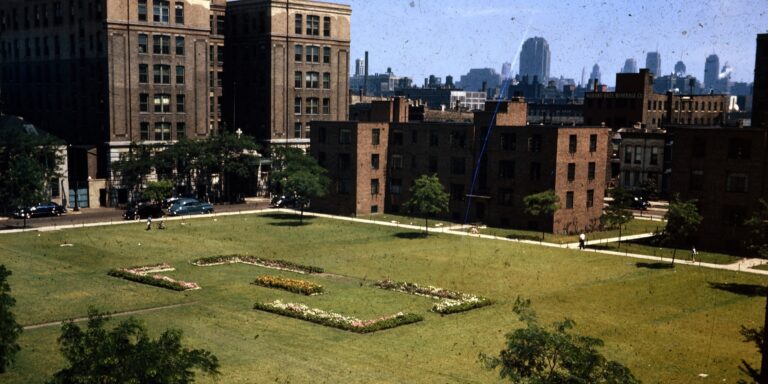
Mary Long Rogers, Landscape Architect, Jane Addams Homes Proposed New Design of the Play Areas and Landscaping, July 10, 1941. Burnham and Ryerson Art and Architecture Archive, Art Institute of Chicago.
National Public Housing Museum, 919 S. Ada Street, Chicago, IL 60607
In conversation with Lisa Yun Lee, Executive Director and Chief Curator at the Museum, the wide-ranging chat will also touch on women in architecture and the stories of women architects, planners, and designers who were instrumental in shaping public housing, such as Mary Long Rogers, landscape architect for Jane Addams Homes, and Beverly Lorraine Green, the first African American woman to be licensed as an architect in the United States.
FREE, drop-in. Presented as part of Open House Chicago.

Exploring how safe, accessible, and high-quality outdoor spaces can strengthen public housing communities, in collaboration with Trust for Public Land