Raj Chetty in Conversation on Economic Mobility and Housing Justice
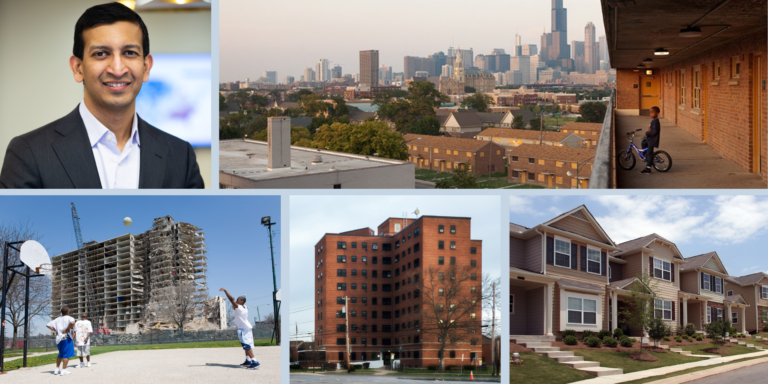
A timely conversation with economist Raj Chetty offers insights into the long-term impact of the HOPE VI program
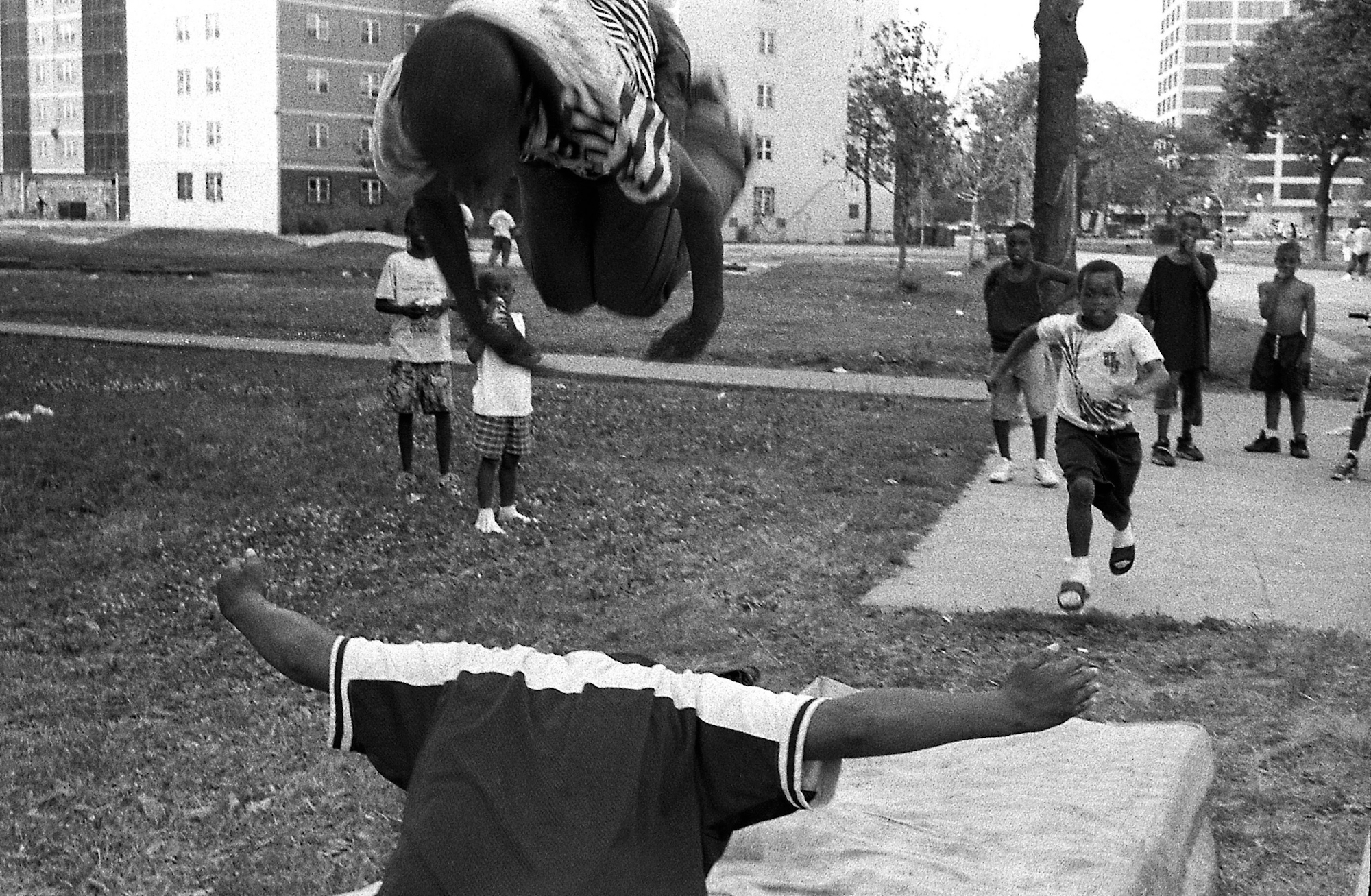
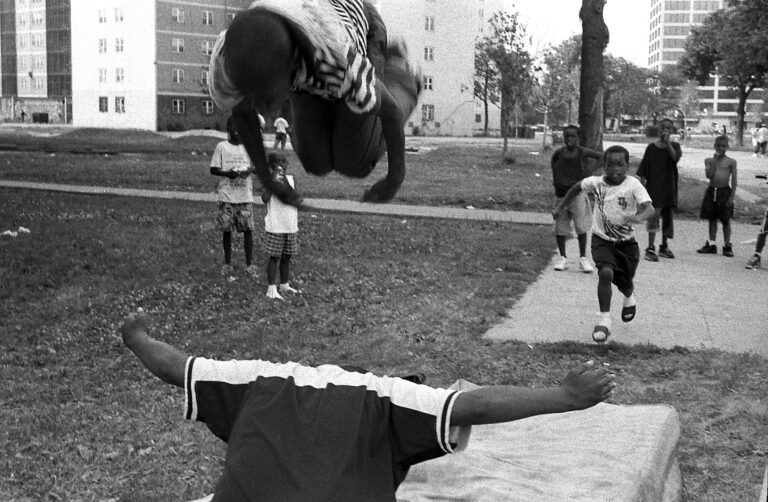
Patricia Evans, Boys Jumping, Stateway Gardens, 1998. From the View from the Ground photo archive, courtesy of the Invisible Institute.
The Plan sought to rehabilitate or replace all of Chicago’s public housing. It would disrupt entrenched patterns of segregation and concentrated poverty, and address unsafe buildings. New mixed-income developments would integrate public housing residents into the larger social, economic, and physical fabric of Chicago. In one of the Plan’s first acts, the city bulldozed eleven high-rise public housing developments, forcibly displacing tens of thousands of families. More than twenty five years later, hundreds of acres of land remains vacant and the city has nearly 20,000 fewer public housing units than it once had.
The National Public Housing Museum itself was founded in response to the Plan for Transformation, as public housing residents in the early 2000s organized to save a portion of the Jane Addams Homes from demolition and established a museum to preserve their collective voices, memories, and the histories of public housing nationwide.
Today, the legacy of the Plan for Transformation remains a critical point of reflection and response. Through talks, exhibits, and other free public programs, the National Public Housing Museum continues to explore its impact on the civic life of Chicago and examine related policies that are shaping the future of public housing.
A timely conversation with economist Raj Chetty offers insights into the long-term impact of the HOPE VI program
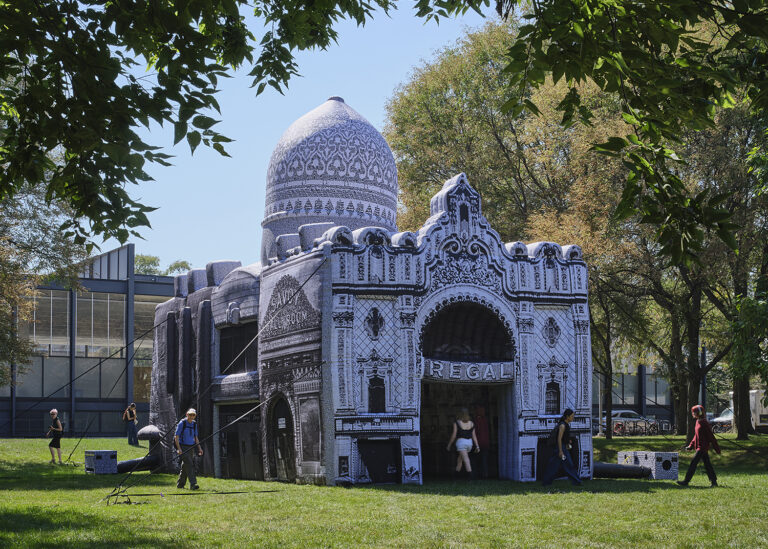
Join us to explore histories of demolition and displacement through a series of site-specific activations inside and around Floating Museum’s inflatable monument for Mecca.